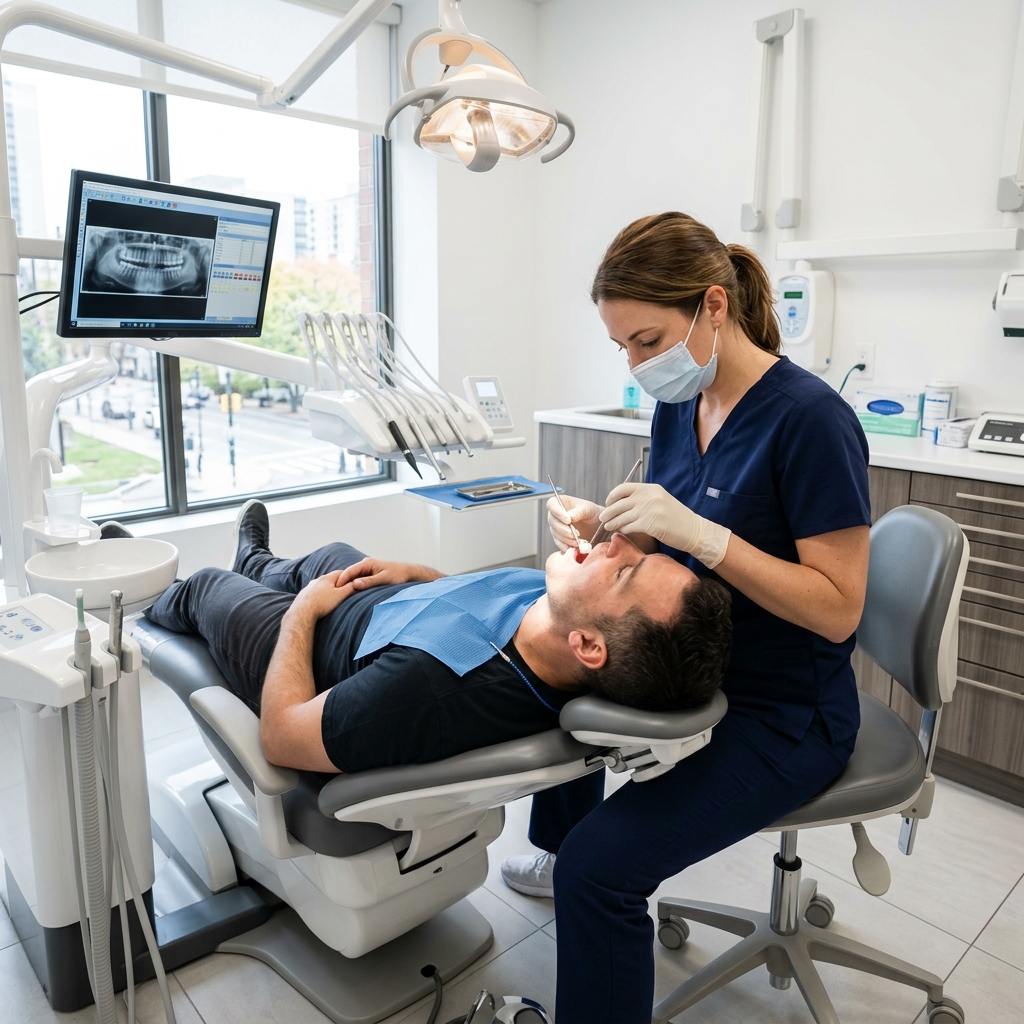
Is Your Chipped Tooth a Dental Emergency? Here's How to Check
Quick Answer: A chipped or cracked tooth is a dental emergency if it causes sharp or lingering pain, exposes the tooth's inner layers, has jagged edges cutting your cheek or tongue, or came from a hard impact. A small surface chip with no pain and smooth edges can usually wait for a regular appointment, though it's still worth having checked.
Biting into something hard, taking a fall, or catching an elbow during a pickup game can leave a tooth chipped or cracked in a matter of seconds. The confusing part isn't the injury itself, it's figuring out what to do next. Does this need attention right now, or can it wait until next week? That question sends a lot of Plainfield, NJ patients searching for a chipped tooth emergency near me before they even pick up the phone.
What Actually Separates a Minor Chip From a Real Emergency
Not every tooth injury carries the same urgency. At Rosa Dental, the difference usually comes down to what's exposed and how much it hurts.
A minor chip usually involves only the outer enamel: no pain, no temperature sensitivity, no sharp edge on your tongue. These are worth mentioning at your next checkup, but rarely need same-day care.
A deeper break is different. If the crack exposes the dentin underneath, the tooth becomes sensitive to hot, cold, and even air. Reach the pulp, where the nerve sits, and pain often becomes constant. According to the American Dental Association, fractures reaching the pulp typically need prompt treatment to prevent infection or tooth loss.
Signs That Mean You Should Call Right Away
A few signs mean it's time to call our emergency dentistry team the same day:
- Sharp, shooting pain when you bite down or breathe in cold air
- A visible dark spot or discoloration at the center of the break, which can signal nerve involvement
- A jagged or sharp edge that's cutting the inside of your cheek, lip, or tongue
- Swelling in the gum near the injured tooth
- The injury happened from a fall, sports impact, or car accident, even if pain hasn't set in yet
That last point catches people off guard. Adrenaline from an accident can mask pain for hours, so no pain right after doesn't rule out a real problem underneath.
When It's Reasonable to Wait
If the chip is small, the edge feels smooth, and there's no pain with hot or cold, it's generally safe to schedule a routine visit instead of an urgent one. That said, a rough edge left alone can catch on food and worsen over time, so mention it at your next cleaning or book a same-day appointment if one's convenient.
What to Do in the Meantime
While you're deciding whether to call, a few simple steps protect the tooth and reduce discomfort:
- Rinse gently with warm water to clear debris
- Save any broken piece in milk or water and bring it with you
- Apply a cold compress to control swelling
- Avoid chewing on that side, and skip very hot or cold foods
- Cover a sharp edge with dental wax or sugar-free gum to protect your cheek and tongue
What Treatment Usually Looks Like
Treatment depends on how deep the break goes. A minor chip is often fixed with a quick bonding procedure in one visit. A crack reaching the dentin may need a crown to fully protect the tooth, and a break into the nerve usually means root canal treatment first. Digital imaging lets us see exactly how far a crack extends, since some fractures aren't visible from the surface alone.
What This Looks Like for Plainfield Patients
Every chipped tooth is priced differently, since treatment ranges from a simple bonding repair to a crown or root canal depending on the break. What stays consistent for patients across Plainfield, North Plainfield, Scotch Plains, Fanwood, and Watchung, NJ is the support around that cost: an upfront estimate, a same-day path when it's a real emergency, and financing if the fix turns out bigger than expected. That's what "affordable care" should actually mean, not just one low number on one procedure.
Call to Action
If you're not sure whether that chip needs attention today or can wait for a regular visit, the safest next step is having it looked at rather than guessing from how it feels. Rosa Dental in Plainfield, NJ can take a look and tell you plainly whether it's a same-day emergency or something to schedule normally, reach out to schedule a consultation or call 908-622-4200 to get a straight answer about your tooth.
Frequently Asked Questions
1. Can a chipped tooth get worse if I don't treat it right away?
Yes. Even a chip that starts out small can widen with normal biting and chewing, especially on a tooth you use often. What begins as a simple bonding fix can turn into a bigger repair, like a crown, if the crack has time to spread.
2. Should I go to the ER or call an emergency dentist for a chipped tooth?
For most chipped or cracked teeth, an emergency dentist is the right call, since ERs typically don't have the equipment to treat the tooth itself and will usually refer you out anyway. The exception is a larger trauma, like a car accident with facial injuries, which does warrant an ER visit first.
3. How much does it cost to fix a chipped tooth?
Cost depends on how deep the break is and what treatment it needs, ranging from a simple bonding procedure to a crown or root canal for a more serious fracture. We'll walk you through the specific cost for your situation, and what your insurance covers, before any treatment begins.
4. How soon can I eat normally after getting a chipped tooth fixed?
For a simple bonding repair, you can usually eat normally right away once the numbness wears off, typically within an hour or two. If you needed a crown or root canal, we'll give you specific guidance since those treatments may call for softer foods for a day or so while everything settles.
5. My child chipped a baby tooth. Does that still need to be checked?
Yes, even a chipped baby tooth is worth having looked at, since baby teeth still play a role in speech, chewing, and holding space for the permanent tooth underneath. A minor chip may just need monitoring, but any pain, discoloration, or looseness should be evaluated the same way you would for an adult tooth.