What Age Should Kids Have Their First Dental Checkup?
Quick Answer: Most pediatric dental guidelines recommend a child's first dental visit happen by their first birthday, or within six months of their first tooth coming in, whichever comes first. That's earlier than many parents expect, since it's well before a full set of teeth has come in. The early visit isn't about doing major treatment; it's about catching problems while they're small and helping your child get comfortable with the dentist's office.
Most parents assume the first dental visit can wait until a child has more teeth, or until they're old enough to sit still and follow instructions. In practice, dentists recommend the opposite. Parents searching for a dentist near me for the first time often do so once a baby tooth comes in and they realize they're not sure what "normal" looks like or when care should actually start.
Why the Timeline Is Earlier Than It Seems
It can feel unnecessary to schedule a dental visit before a child even has many teeth, but the American Academy of Pediatric Dentistry recommends establishing care by age one specifically because early monitoring makes a real difference. Baby teeth are more vulnerable to decay than many parents assume, and a cavity that goes unnoticed in a toddler can progress quickly enough to affect the tooth's nerve.
There's also a practical reason for starting early: it gives your child repeated, low-pressure exposure to the dental office before any actual treatment is ever needed. A child whose first dental memory at Rosa Dental is a quick, gentle look-and-count visit tends to handle future appointments very differently than a child whose first visit happens because something already hurts.
What Actually Happens at a First Visit
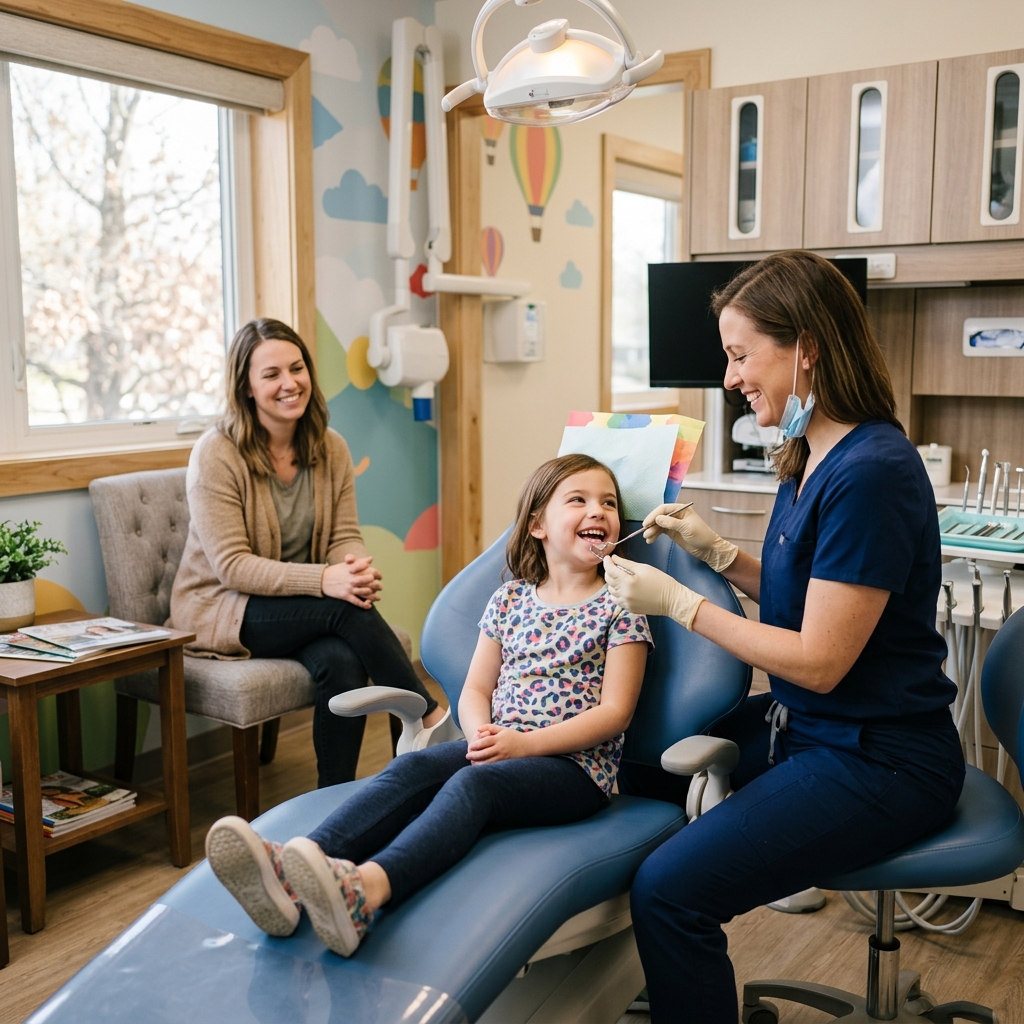
A first appointment looks nothing like a typical adult cleaning. For a very young child, it's often brief: a quick look at the teeth and gums, a check of how the jaw is developing, and a conversation with the parent about brushing, teething, thumb-sucking, and diet. Many dentists will have the child sit in a parent's lap rather than the exam chair for this first visit.
If your child is a bit older at their first visit, the appointment may include a gentle cleaning and, depending on age and risk factors, an assessment of whether a fluoride treatment makes sense. The goal throughout is comfort first, information second, and treatment only if something genuinely needs it.
Signs You Shouldn't Wait, Even If Your Child Is Under One
While the first-birthday guideline is the general rule, a few situations call for an earlier visit:
- White or brown spots appearing on a tooth, which can indicate early decay
- A tooth that looks discolored, chipped, or came in at an unusual angle
- Ongoing teething pain that doesn't seem to improve with typical remedies
- A visible injury to the mouth, gums, or a tooth
If any of these come up, it's worth calling sooner rather than waiting for the recommended timeline to arrive.
What Happens If the First Visit Gets Delayed
Skipping the early visit doesn't automatically mean a child will have dental problems, but it does mean less time to catch things early. Baby teeth decay can move faster than many parents expect, partly because enamel on primary teeth is thinner than on adult teeth. A child who's already dealing with a cavity or discomfort at their first visit tends to have a harder time associating the dentist with something positive, which can shape how they feel about dental care for years afterward.
How Parents Can Prepare for the First Appointment
A few things make the first visit smoother for both the child and the parent:
- Keep the visit low-key; avoid describing it with words that could sound scary
- Bring a comfort item like a small toy or blanket if it helps the child feel at ease
- Share any concerns about teething, feeding, or oral habits so the dentist can address them directly
- Expect the visit to be short, and don't set expectations around a full cleaning at this stage
Call to Action
If your child hasn't had their first dental visit yet, or you're just not sure when to schedule it, Rosa Dental in Plainfield, NJ can help you figure out the right timing and make the appointment a comfortable one. Reach out to schedule your child's first visit or call 908-622-4200 to find a time that works.
Frequently Asked Questions
1. What if my child doesn't have any teeth yet by their first birthday?
Some babies get their first tooth later than others, and that's still a good time for a first visit. The dentist can check on gum health, jaw development, and answer questions about feeding and teething even before teeth have fully come in.
2. Do baby teeth really need to be treated if they're going to fall out anyway?
Yes. Baby teeth hold space for adult teeth and support proper chewing and speech development. Untreated decay in a baby tooth can also affect the permanent tooth developing underneath it.
3. How often should young children see the dentist after their first visit?
Most dentists recommend checkups every six months, similar to adults, though this can be adjusted based on a child's individual risk for cavities and how their teeth are developing.
4. Is it normal for my toddler to cry or resist during the first visit?
Yes, that's a common reaction and not something to worry about. Our team is used to working with nervous or upset toddlers and keeps the visit brief and low-pressure specifically for this reason. Most kids warm up more with each subsequent visit as the office becomes familiar.
5. Should I bring my child to my own dental appointment first so they can watch?
This can genuinely help. Seeing a parent go through a routine visit calmly often reduces a child's apprehension before their own first appointment. If that's not practical, describing your own visits in simple, positive terms works well too.